The quiet doubling of the Hamilton household load
When Hamilton Panel Upgrades started tracking why people call, one pattern stood out: the 200-amp conversation almost never starts with the panel. It starts in the driveway or the mechanical room. A Level 2 EV charger pulls 32–48 amps continuously, more than an electric range. A cold-climate heat pump taking over from a gas furnace adds another block of demand, and resistance backup heat on the coldest nights adds more still. Induction ranges, hot tubs, finished basements with their own kitchens, garden suites. Hamilton's housing plans in 2026 are electrification plans, and nearly all of them need more than a service sized for 1975 can carry.
The rule that decides it is the Canadian Electrical Code's Section 8 load calculation. It is straight arithmetic over your square footage, heating type, range, dryer, AC and any EV supply equipment. Plenty of 100-amp Hamilton homes fail it the moment a charger is added. Some pass narrowly with a load-management device that throttles the charger whenever the range or dryer runs. That works, but it is a compromise. The clean, permanent answer is more service.
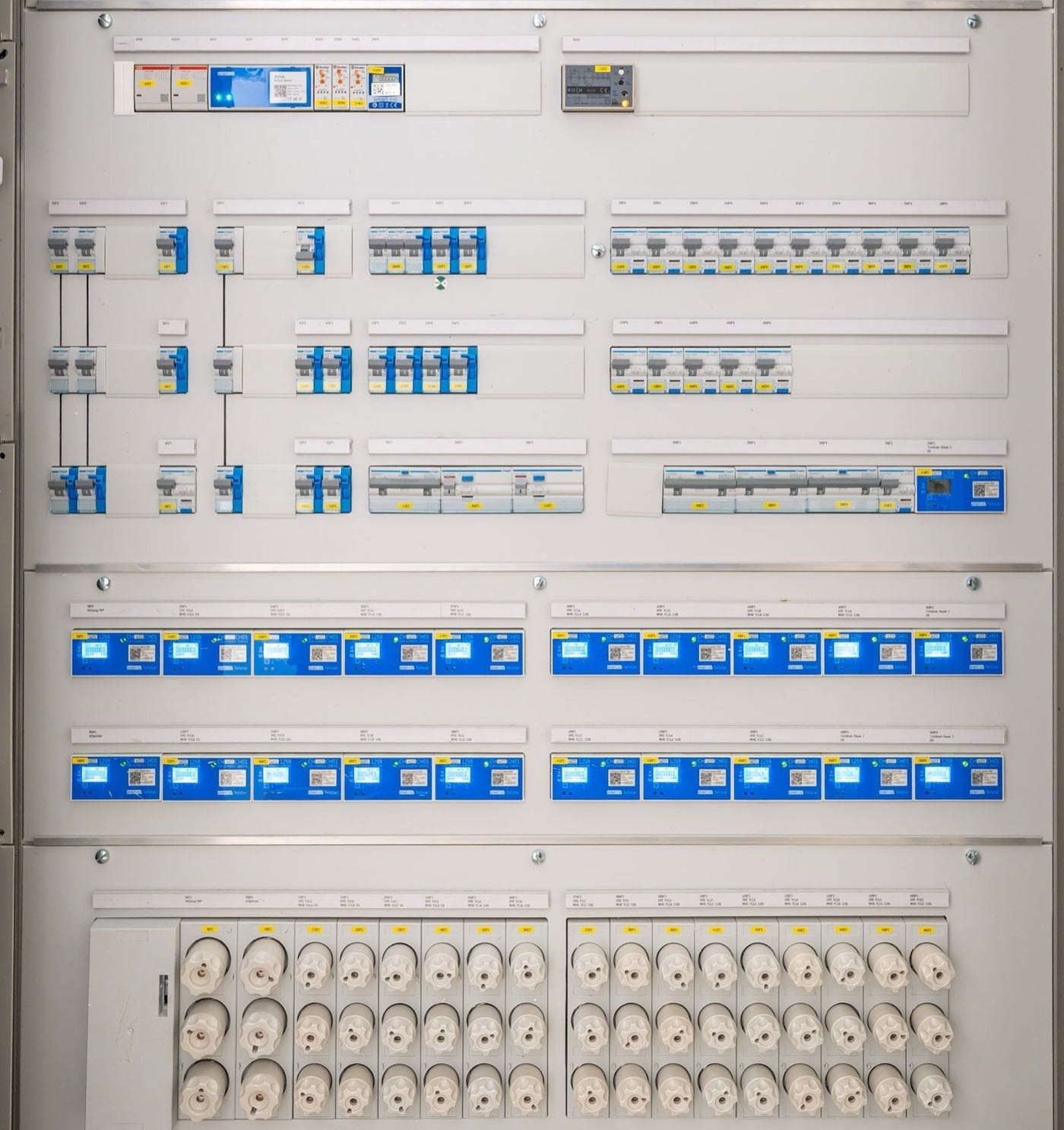
What "upgrading the service" physically means
A service upgrade replaces the equipment that brings power into your house, not just the panel on the wall:
- Service mast and meter base: the pipe and meter socket where Alectra's conductors land are removed and upsized for 200 amps
- Service entrance conductors: new, heavier cable from the mast to the panel location
- The 200-amp panel: a modern Schneider, Siemens or Eaton loadcentre with 40+ breaker spaces, replacing whatever was there (very often a Federal Pioneer Stab-Lok in Hamilton's post-war stock)
- Grounding and bonding brought to current code: the part invisible in photos and required at inspection
- Utility and inspection coordination: Alectra disconnects in the morning, the ESA inspects the completed work, reconnection follows; the full sequence is on the process page
For a typical detached home the whole operation fits in one working day of planned outage.
The bundle economics, plainly: a panel replacement alone runs $1,500–$3,000. Panel plus 200-amp service: $3,000–$4,500+. The roughly $1,500 difference is the cheapest a service upgrade will ever be. As a later standalone project you'd repay the permit, the disconnect and a full crew day just to reach the same result. Line-item detail on the cost page.
Who actually needs it — a straight answer
Not everyone. A gas-heated bungalow with a gas range and no EV plans runs fine on 100 amps, and an honest load calculation will say so. The profiles that genuinely need 200 amps in Hamilton: EV owners and intenders (one charger strains 100 amps; two makes it impossible), heat-pump converts (especially homes leaving oil or gas heat entirely), basement-suite landlords, where a second kitchen and laundry add loads fast, and anyone whose panel is already condemned by an insurer or inspector, for the bundle logic above. If you're mid-purchase and wondering what the house you're buying can support, the buying and selling guide covers how to include the upgrade in the sale.
Details specific to Hamilton services
Two local details come up constantly. First, overhead vs. underground: much of the lower city and the older Mountain runs overhead drops through mature street trees, and the utility's side of the drop sometimes needs replacing along with your mast. That is a coordination item the partner electricians handle with Alectra, not a surprise on the day. Second, the half-upgraded house: plenty of Hamilton homes got a 100-amp breaker panel in the 1980s or 90s while keeping the original 60-amp-era service hardware outside. The load calculation counts the smallest-rated component as the service size, which is why the quote starts from photos of both the panel and the meter base. It's also the visit where older wiring gets noticed. If the house has aluminum branch circuits or knob-and-tube remnants, pricing their remediation alongside the service work saves a second truck visit later.
EV charger installation, handled inside the same job
Most of the partner electricians' 200-amp work in Hamilton now ends the same way: with a Level 2 charger circuit going in while the new panel is open. That's the cheapest order to do the work in: the charger circuit (typically a 50–60 amp breaker feeding a NEMA 14-50 outlet or a hardwired unit like a Tesla Wall Connector, ChargePoint Home Flex, FLO Home or Grizzl-E) is a modest add-on when the crew is already there, versus a separate ESA-permitted visit later. If your load calculation result is borderline, a DCC load-management device can sometimes keep a charger on a 100-amp service. But if you're replacing a condemned Stab-Lok anyway, buying the full 200 amps once is almost always cheaper over the next ten years. Tell us in the quote form that you have or plan to get an EV (if it's on order, the install can be ready before the car arrives), and the written quote will price the charger circuit alongside the service upgrade so you can see both numbers before deciding.