The second name on the underwriter's list
When a renewal questionnaire asks about the electrical panel, homeowners expect the words "Federal Pioneer." But a growing number of the requirement letters that reach Hamilton Panel Upgrades name a different manufacturer entirely. Commander equipment, widely sold under Sylvania branding and related to gear carrying the CEB label, was mainstream Canadian panel hardware for roughly eighteen years, from the mid-1960s into the early 1980s. Those were big construction years here: a large share of Hamilton's 1965–83 housing stock (Mountain subdivisions, Stoney Creek crescents, early Ancaster surveys) could plausibly still be running the original Commander or Sylvania panel it was built with. Nobody keeps a registry; the build date is the best clue.
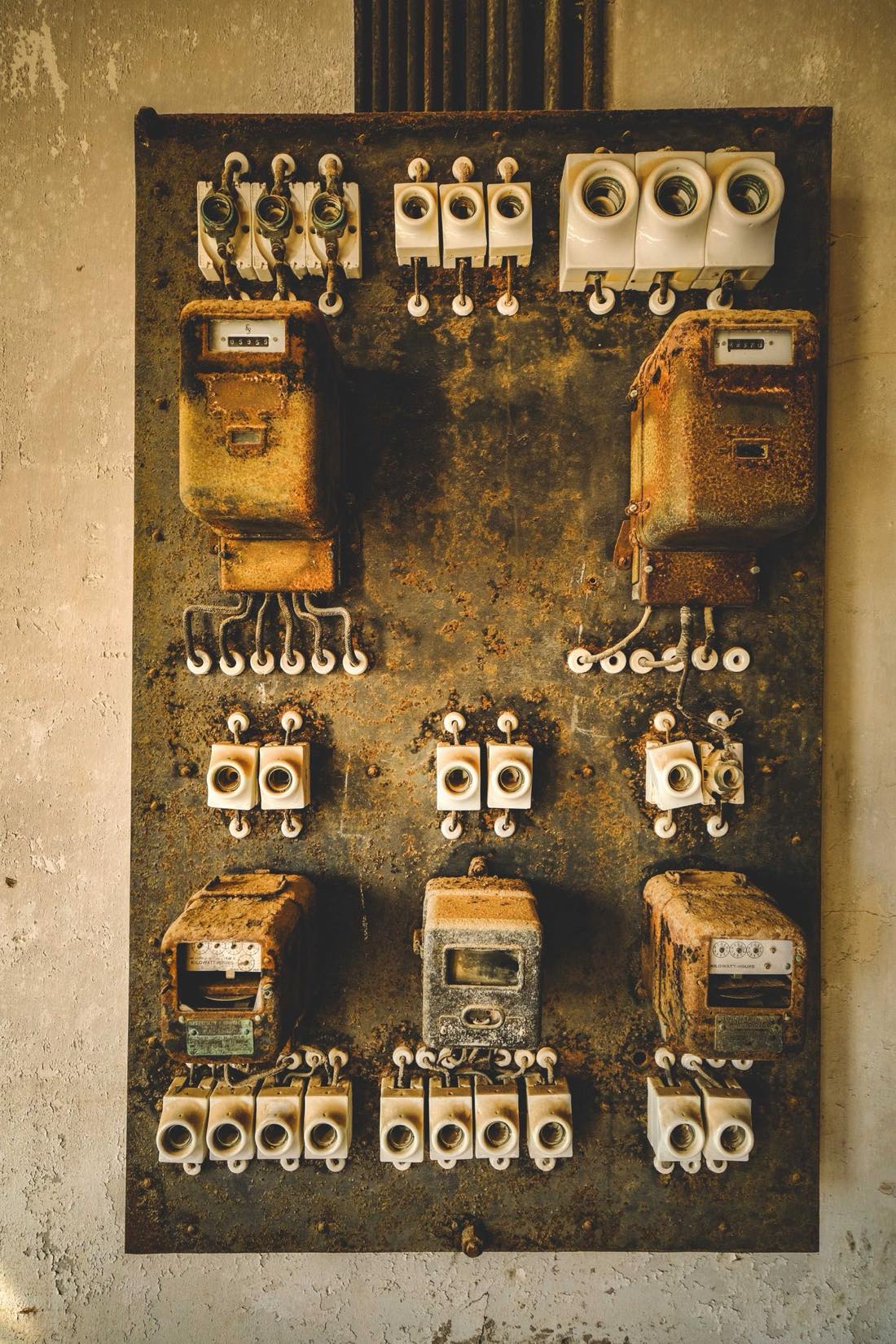
Thirty seconds at the panel door
Identification is quick and safe if you touch nothing but the hinged outer door. Leave the screwed-on inner cover alone. Look for the brand name printed on the paper label or stamped into the metal: Commander, Sylvania, or CEB. Cross-check against the house's build date; a panel from that mid-60s-to-early-80s window that has never been changed is exactly the profile. Not sure what you're reading? A photo of the label through the quote form settles it. A licensed ECRA/ESA partner electrician identifies the panel from the image and prices the job without a site visit in most cases.
The bus bar is the weak point, not the paint
Every breaker in a panel clamps onto the bus bars, the metal strips that distribute power to each circuit. In Commander-era equipment, the alloy used in those bus bars deteriorates as it ages. Connections between breaker and bus gradually loosen; a loose connection has higher resistance; higher resistance makes heat, right at the centre of the panel, cycle after cycle. Worse, breakers seated on a degraded bus can fail to trip when a circuit overloads, the one job a breaker exists to do. None of this is visible from the basement floor. A Commander panel that has run without incident for five decades looks exactly like one whose connections are overheating, which is why insurers stopped assuming these panels are fine.
There was no recall, and that's the point. No regulator ever ordered Commander or Sylvania panels out of Canadian homes. The enforcement came from insurance companies instead: they flag these panels on applications and inspections, raise the premium, attach replacement conditions to renewals, or refuse to insure the home altogether. The paper trail that matters is your policy, not a government notice.
Why the fix is a new panel, not new breakers
The natural first question (can't I just replace the breakers?) fails on cost. Certified replacement breakers for Commander and Sylvania panels are scarce and cost-prohibitive; sourcing a full set can cost a large fraction of a whole new panel. And because the aging problem sits partly in the bus bars themselves, fresh breakers on aged bus metal don't answer the insurer's concern anyway. The standard remedy across the trade is a complete panel swap: Commander out, a current Schneider, Siemens or Eaton panel in, installed under an ESA permit with an Alectra disconnect-reconnect booked around it, finishing with the ESA Certificate of Inspection your insurer requires.
Expect roughly $2,000–$4,500 for the swap, with panel size, circuit count and the state of the service entrance moving the number within that band (the cost page breaks the drivers down). The smarter purchase, though, is the bundle: if the house is still on 100-amp service, adding a 200-amp service upgrade reuses the permit, the utility disconnect and the electrician's day on site. The expensive fixed costs get paid once instead of twice, and the house comes out ready for an EV charger or heat pump instead of merely insurable.
One design, several badges: sorting the CEB question
The branding sprawl confuses people, so here is the short version:
- Commander: the manufacturer's own name, and the one insurers most often write on requirement letters
- Sylvania: the retail badge on many of the same panels; a "Sylvania panel" and a "Commander panel" of this era are the same equipment
- CEB: a related label from the same equipment family; treat a CEB door label exactly as you'd treat the other two
Whichever badge is on your door, the insurer's remedy is identical, which is why the quote request only needs the photo, not the full brand history.
Commander vs. Stab-Lok: same letter, different defect
Hamilton's insurer-flagged panels come in two families, and they fail differently. Federal Pioneer Stab-Lok panels are flagged for the breaker mechanism itself: documented rates of breakers not tripping under overload. Commander and Sylvania panels are flagged for the aging bus-bar alloy that loosens and overheats connections, with failure-to-trip as a consequence. Different root cause, same outcome: the requirement letter, the ESA-permitted replacement, the certificate. If your basement panel says Federal-anything rather than Commander-anything, the Stab-Lok page is the one you want; the price band and the one-day swap are much the same either way.
When the panel surfaces mid-transaction
These panels most often get discovered at the worst moment: a pre-sale home inspection. The inspector photographs the Sylvania label, the buyer's insurer reads the report, and suddenly a closing date has an electrical condition attached. The steps don't change: written quote from the photo, ESA permit, swap day, certificate to whichever lawyer or insurer is asking. Sellers who handle it before listing remove the issue before buyers see it; buyers who price it into the offer get a solved problem. The buying and selling guide walks through both sides of that negotiation, and it applies to Commander panels exactly as it does to Federal Pioneer.