A commodity market, printed in your walls
Of the three old-electrical problems Hamilton Panel Upgrades handles, aluminum wiring has the most economic origin story. In the mid-1960s, copper prices surged (Vietnam-era demand, supply strikes) and builders across North America switched branch-circuit wiring to aluminum until the mid-1970s, when revised standards and costly field experience ended the practice. Housing-era data suggests roughly 14% of Hamilton's dwelling stock went up in that 1965–1976 window: the tract streets of Stoney Creek below the escarpment, big sections of the Mountain, the era's Ancaster survey lots. Estimates put 8,000–13,000 Hamilton homes still carrying original aluminum branch circuits.
Spotting it is straightforward. Check the build year first, then the evidence: cable jackets stamped ALUMINUM, ALUM or AL where they enter the panel or cross the attic, and silver-coloured strands at any connection a licensed person opens. If your house is a 1969 side-split that's never been gutted, plan on it being there.
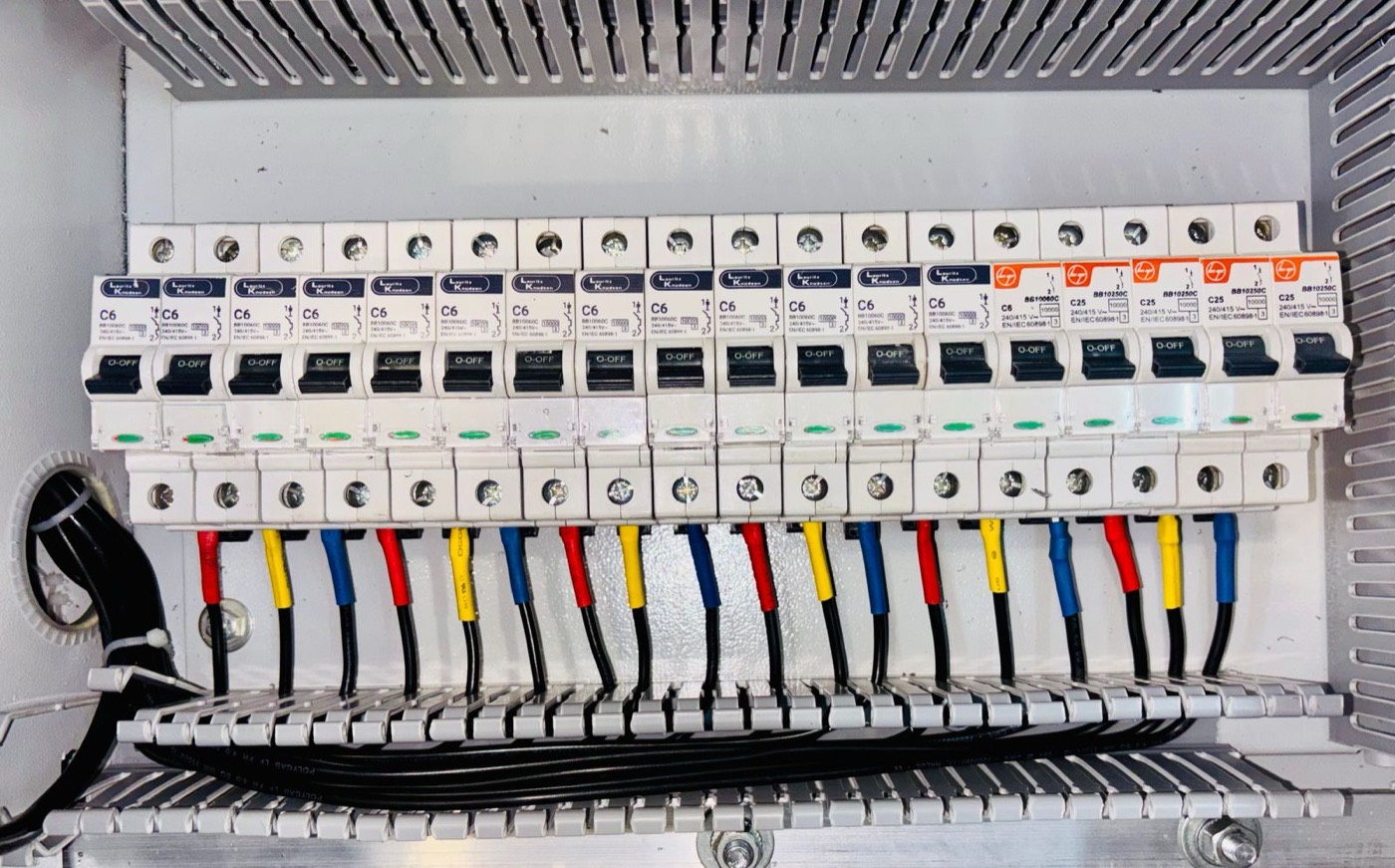
Why the terminations fail while the wire survives
Aluminum conducts electricity well. What it does badly is stay tight at a connection. Three properties of the metal make its connection points the problem:
- Thermal creep: aluminum expands and contracts with load cycles more than copper, and over thousands of cycles it gradually works loose under a terminal screw
- Oxidation: bare aluminum instantly forms an oxide layer that resists current; a loose, oxidized joint becomes a small heater inside a receptacle box
- Softness: the metal deforms under an over-tightened screw, thinning the conductor exactly where the current concentrates
The symptoms Hamilton homeowners report are the standard warning signs: a warm cover plate, a faint hot-plastic smell near an outlet, lights that flicker when the toaster runs, receptacles that died one by one over the years. Each one is a failing termination, and each is why insurers treat the era as a category, covered on the insurance page.
The insurer treatment is milder than for panels or knob-and-tube: aluminum usually draws a premium surcharge or an inspection condition rather than refusal, and pigtailing by a licensed contractor is accepted as the permanent fix. No other system on this site is treated this leniently.
Pigtailing: the fix that matches the failure
Because the risk is at the connection points, the remedy goes exactly there. At every outlet, switch and light fixture, the partner electrician joins a short copper pigtail to the aluminum conductor using a connector rated for aluminum-to-copper joints, and only copper ever touches the device terminal again. Devices that stay in direct contact with aluminum must carry the CO/ALR rating, and connectors must be approved for the purpose. These details separate an insurable remediation from unaccepted amateur work. A whole house takes a day or two, finishes under $3,000 in most cases, and produces the documentation your insurer needs. Rewiring the whole house in copper remains available but is rarely justified; the honest comparison is on the cost page.
The panel-swap piggyback
Here's the scheduling insight that saves the most money: 1965–1976 is also the peak Federal Pioneer era. The same construction wave that put aluminum in the walls very often put a Stab-Lok panel on them. So the insurer letter that names one frequently names both. During a panel replacement, every branch circuit is already being disconnected, inspected and re-terminated at the new panel; adding whole-house pigtailing while the crew is already on site is the cheapest that job will ever be. One visit, one ESA permit through the standard process, one certificate answering both line items on the letter. If you're pricing a panel swap for a house of this era, ask for the aluminum add-on number even if you haven't confirmed the wiring. The answer costs nothing, and the numbers usually make the choice clear.