What mass production put in Stoney Creek's basements
Stoney Creek is the opposite of a century-home problem, and Hamilton Panel Upgrades treats it that way. Where Dundas has wiring from the 1890s, Stoney Creek's housing is newer and more uniform: the great postwar fill-in below the escarpment, when survey after survey of side-splits, backsplits and brick bungalows went up along the QEW corridor between the older village and the lakeshore. Builders working at that pace standardized everything (floor plans, furnaces, and the electrical package). For most of those decades the electrical package meant a Federal Pioneer Stab-Lok loadcentre, and from 1965 onward it increasingly meant aluminum branch wiring behind the outlets as well.
Uniformity has two effects. It means the problem is widespread here, but it also means it's predictable. Tell a partner electrician your street and build year and they can usually describe your panel before seeing a photo. That predictability is why Stoney Creek quotes come back fast and accurate, and why insurance renewal letters tend to arrive on the same streets in waves: insurers profile by construction era, and this community fits the profile exactly.
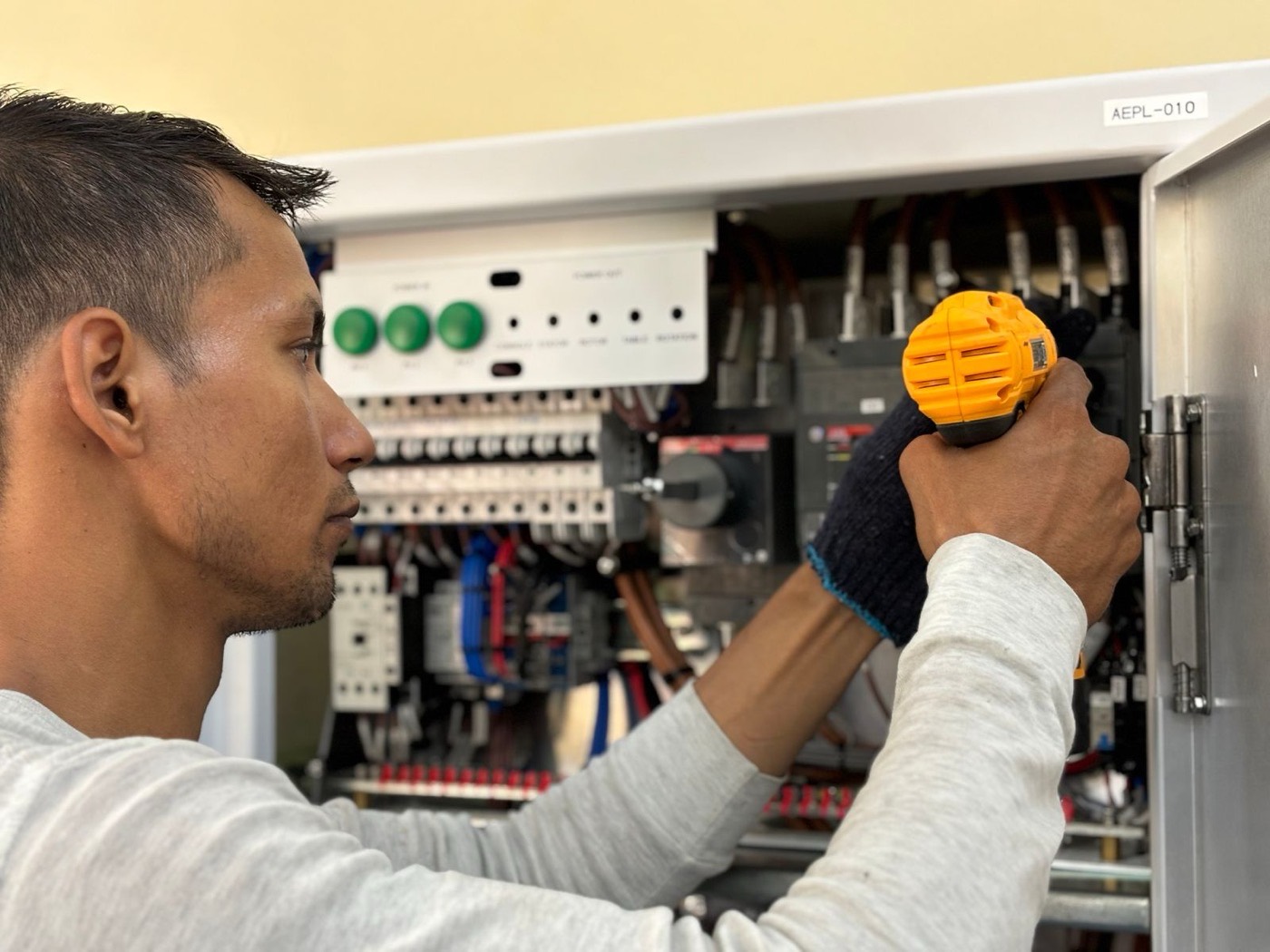
The 1970-built house: two flags, one fix
The most common Stoney Creek job is the house built in the aluminum overlap, roughly 1965–1976. It often carries both era problems at once (the Stab-Lok panel on the wall and aluminum conductors in the walls) and the insurer's letter frequently names the pair. Here the costs work in your favour: a panel replacement already requires disconnecting and re-terminating every branch circuit, so adding whole-house pigtailing while the crew is already on site adds one day of work and typically under $3,000 on top of the swap. One ESA permit, one Alectra disconnect, one certificate answering the entire letter. The same-visit logic that makes the 200-amp bundle smart makes the pigtailing add-on smart, and plenty of Stoney Creek jobs sensibly take all three.
Stoney Creek pricing, per the citywide tables: bare swap $1,500–$3,000 · panel + 200-amp bundle $3,000–$4,500+ · aluminum pigtailing under $3,000 as an add-on. Full breakdowns on the cost page.
The commuter-driveway factor
Stoney Creek's identity as a QEW commuter community is now an electrical fact: this is one of Hamilton's fastest EV-adopting areas, and a Level 2 charger is the single biggest load most of these houses have ever carried. On the original 100-amp services, competing with electric dryers, central air and the heat pumps replacing mid-century furnaces, the load calculation often fails. The good news: because so many local panels need replacing on the insurer's schedule anyway, the capacity question and the compliance question can be handled in one job. Swap the flagged panel, take the service to 200 amps for the added difference in cost, and land the charger circuit in a panel with room for it. All of it is a single day via the standard permit and utility process.
Old Stoney Creek: the exception at the core
One pocket is different. The historic village around Battlefield House and King Street East predates the boom by a century, and its homes are like lower-city stock: possible knob-and-tube remnants, small services, and renovation layers that need tracing before quoting. It's a small share of Stoney Creek's housing, but if you're in it, start from the century-home approach rather than the subdivision one. And for anyone on either side of a home sale here (the boom streets sell constantly) the buying and selling guide shows how a 24-hour written quote keeps a flagged panel from disrupting your closing.